
How Do You Stop Cats Scratching Sofas?
Learn how to stop cats scratching sofas with simple, cat-friendly methods. Discover why cats scratch furniture, the best scratching posts, training tips, and safe ways to protect your couch.
SOFA CARE AND MAINTENANCE
7/27/20266 min read

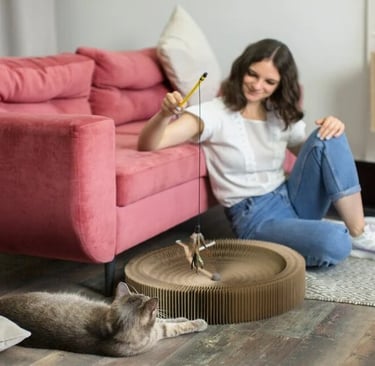
If you've ever walked into your living room to find fresh claw marks running down the arm of your favorite sofa, you already know the sinking feeling that comes with it. You're not alone, and more importantly, your cat isn't being "bad." Scratching is one of the most natural behaviors a cat can display, and once you understand why it happens, stopping it becomes a lot less mysterious and a lot more manageable.
This guide walks through exactly why cats scratch furniture, what actually works to redirect the habit, and how to protect your sofa for good without punishing your cat or damaging your relationship with them.
Why Do Cats Scratch Furniture in the First Place?
Before jumping into solutions, it helps to understand the root cause. Cats don't scratch out of spite or boredom alone; it's a deeply instinctual behavior tied to their physical and emotional well-being.
Here's what's really going on:
Claw maintenance: Scratching removes the dead, outer layer of a cat's claw sheaths, keeping claws sharp and healthy.
Territory marking: Cats have scent glands in their paws, so scratching leaves both a visual mark and a scent signal to other animals.
Stretching and stress relief: The act of scratching stretches the muscles in a cat's shoulders, back, and paws and can also serve as a way to release pent-up energy or anxiety.
Habit and texture preference: Once a cat finds a surface it likes often something with a similar grain or resistance to a scratching post it will keep returning to it.
Sofas tend to be prime targets because they're tall, sturdy, centrally located, and often upholstered in fabrics with a texture cats find satisfying to dig into.
Step 1: Provide Better Alternatives Than the Sofa
The single most effective strategy is redirection, not restriction. Cats need to scratch, so the goal is to make scratching posts and pads more appealing than your furniture.
Consider the following when choosing scratching alternatives:
Material matters: Sisal rope, sisal fabric, and cardboard tend to be favorites, while carpet-covered posts can confuse cats since it feels similar to your carpet (which you don't want scratched either).
Height and stability: Vertical scratchers should be tall enough for a full-body stretch (usually at least 30 inches) and sturdy enough that they don't wobble or tip during use.
Orientation options: Some cats prefer horizontal scratching pads over vertical posts, so it's worth offering both until you learn your cat's preference.
Placement is everything: Put scratchers near the sofa or in the exact spot your cat already scratches, not tucked away in another room.
Many owners make the mistake of buying one scratching post and placing it somewhere out of the way. Cats are far more likely to use scratchers that are conveniently located near their favorite scratching spots or high-traffic areas of the home.
Step 2: Make the Sofa Less Appealing
While you're introducing better alternatives, it also helps to make the sofa itself a less attractive scratching target.
Some effective techniques include:
Double-sided tape: Cats generally dislike the sticky texture on their paws, and sofa-safe products like Sticky Paws are designed specifically for this purpose.
Aluminum foil or plastic sheeting: Temporarily covering scratched areas can discourage repeat visits, though this is more of a short-term deterrent than a long-term fix.
Citrus or cat-safe deterrent sprays: Many cats are put off by citrus scents, so a light spray of diluted citrus solution (always cat-safe and unscented near the face) can help.
Furniture covers or throws: A slipcover not only protects the sofa but can be swapped for a texture cats find less interesting to dig into.
The goal isn't to scare or punish your cat, but simply to make the sofa temporarily unattractive while the scratching post becomes the new habit.
Step 3: Use Positive Reinforcement, Not Punishment
It's tempting to shout, spray water, or scold a cat caught scratching the sofa, but punishment-based methods often backfire. Cats don't associate the punishment with the scratching itself they associate it with you, which can create fear, stress, or even more anxious scratching behavior.
Instead, try this approach:
Reward good behavior immediately: When your cat uses the scratching post, offer a treat, verbal praise, or a favorite toy right away so they connect the action with something positive.
Use catnip or silvervine: Rubbing a small amount on a new scratching post can draw your cat toward it naturally.
Redirect calmly: If you catch your cat mid-scratch on the sofa, gently pick them up (if they're comfortable with handling) and place them at the scratching post instead, then reward them once they engage with it.
Be consistent: Repetition is key. Cats learn through consistent, repeated associations, not one-off corrections.
Over a few weeks, most cats will begin to favor the reinforced behavior, especially if the alternative is more accessible and rewarding than the sofa.
Step 4: Keep Claws Trimmed and Consider Nail Caps
Even with the best scratching post in the world, a cat with long, sharp claws can still leave marks on furniture during play or an occasional lapse. Keeping claws trimmed reduces the damage even if a scratch does happen.
A few practical notes on nail care:
Trim every 2-3 weeks: Regular trims keep claws blunt enough to minimize damage without affecting your cat's ability to grip and stretch.
Get your cat comfortable early: Gradually introducing paw handling from a young age (or slowly with an adult cat) makes trims far less stressful for both of you.
Ask your vet or groomer for a demonstration: If you're nervous about trimming claws yourself, a quick demonstration can build confidence.
Nail caps are a soft-touch option: Vinyl nail caps, applied by a vet or groomer (or at home with practice), blunt the claw tip entirely and typically need reapplying every 4-6 weeks.
Trimming and nail caps aren't replacements for proper scratching outlets, but they add an extra layer of furniture protection while training is underway.
Step 5: Address Underlying Stress or Environmental Triggers
Sometimes excessive scratching signals something bigger than a simple furniture preference. If your cat's scratching has increased suddenly or seems more aggressive than usual, it may be tied to stress, boredom, or environmental changes.
Common triggers worth considering:
New pets or household changes: A new animal, person, or even rearranged furniture can unsettle a cat and increase scratching as a way of re-marking territory.
Lack of mental stimulation: Cats without enough play, climbing opportunities, or environmental enrichment often redirect that energy into scratching.
Insufficient vertical space: Cats feel safer with access to height, so cat trees, shelves, or window perches can reduce anxiety-driven scratching.
Litter box or health issues: In rare cases, changes in behavior can be linked to discomfort or illness, so a vet visit is worthwhile if scratching is paired with other unusual behaviors.
Enriching your cat's environment with climbing structures, interactive toys, and regular play sessions often reduces problem scratching as a side effect of a generally calmer, more satisfied cat.
A Quick Recap: Building a Scratch-Friendly Home
Stopping a cat from scratching the sofa isn't about eliminating the behavior it's about giving that behavior somewhere better to go. When you combine the right alternatives, smart deterrents, positive reinforcement, and a bit of patience, most cats will happily shift their attention away from the furniture within a few weeks.
The households that see the fastest results tend to do a few things consistently:
Place scratchers exactly where the cat already prefers to scratch
Reward the desired behavior every single time, especially early on
Avoid yelling, spraying, or physically punishing the cat
Keep nails trimmed as a backup layer of protection
Watch for signs of stress or lack of enrichment driving the behavior
Frequently Asked Questions:
How long does it take to stop a cat from scratching the sofa?
Most cats begin shifting their behavior within 2 to 4 weeks of consistent redirection, though older cats with long-standing habits may take a bit longer.
Do scratch deterrent sprays actually work?
Many cats respond well to citrus or cat-specific deterrent sprays, though results vary by individual cat, so it often works best paired with a scratching post alternative.
Is declawing a solution?
Declawing is a major surgical procedure that removes part of the toe bone, not just the claw, and is discouraged or banned in many regions due to long-term pain and behavioral effects. Non-surgical solutions like trimming, caps, and scratching posts are almost always safer and more effective long-term.
Will one scratching post be enough?
Multiple scratchers placed in different rooms or scratching styles (vertical and horizontal) tend to work better than relying on just one, especially in multi-cat households.
Can older cats still learn to use a scratching post?
Yes, though it may take more patience and consistency compared to kittens, since older cats have had more time to build a habit around the sofa specifically.
Western Ranch Interiors
Heirloom furnishings built for architectural ranch living.
Home-Shop-Reviews-Contact
Trade & Support
concierge@westernranchinteriors.com
Trade Program & Custom Commissions
Bozeman, Montana
© 2026 Western Ranch Interiors-Sourced directly from master blacksmiths, leatherworkers, and timber craftsmen across North America.
HAND-FORGED - HEIRLOOM QUALITY